


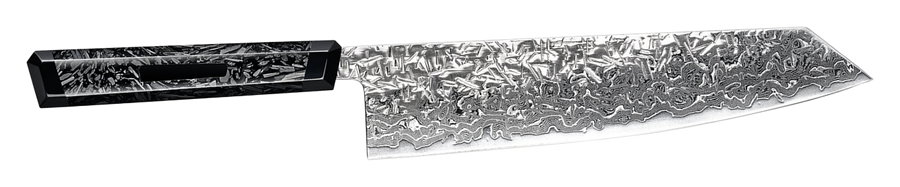
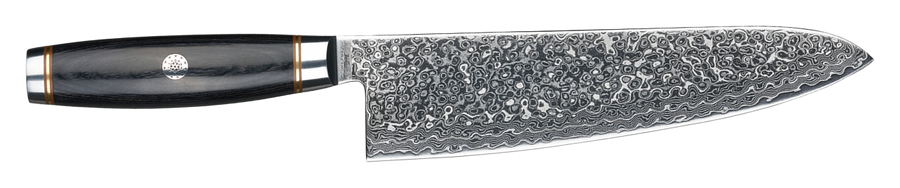
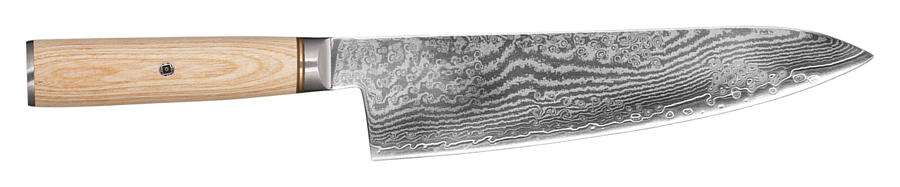
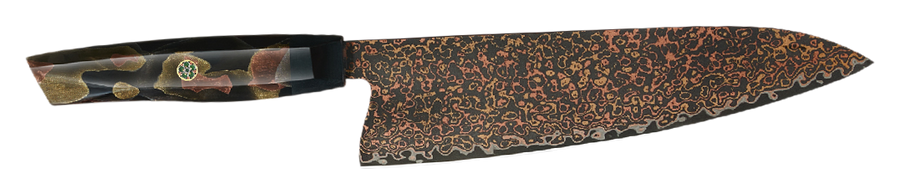





CobaltDamascus Cleaver 7.5"
- Blade length
- 7.5" (19 cm)
- Steel
- 67-layer damascus, 10Cr15CoMoV core
- Hardness
- 60 ± 2 HRC
- Handle
- Burl wood and honeycomb midnight blue resin, stainless steel bolster
Black Friday Month-28 % --d --h --m
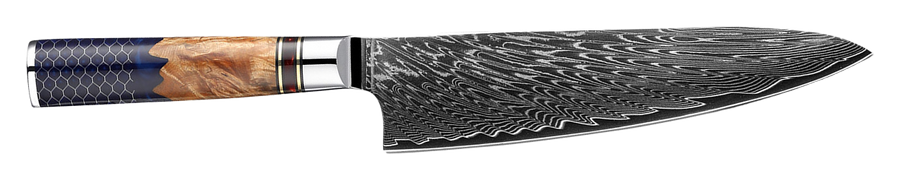
At 9.3 oz, the Cobalt cleaver is the heaviest piece in the series. Its tall, straight 7.5-inch blade suits Asian-inspired cooking: slicing ginger and lemongrass, prepping vegetables for a stir-fry, cutting spare ribs through the cartilage. Large, hard bones are still a job for a saw. The handle combines burl wood and honeycomb midnight blue resin, with a black spacer.
This Chinese-style cleaver has a wide, tall blade. It slices, chops and doubles as a scoop to carry food from board to pan. Heavier than a chef knife, it minces herbs, garlic and meat with little effort and handles cartilage and small soft bones. Japanese-style blade, thin and hard.
Blade and Handle
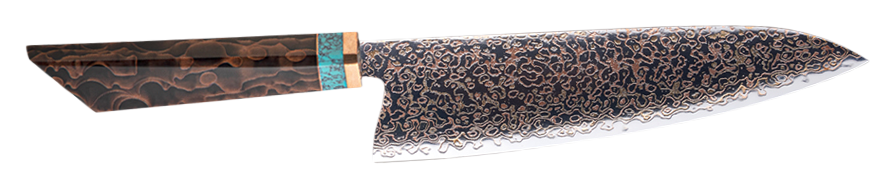
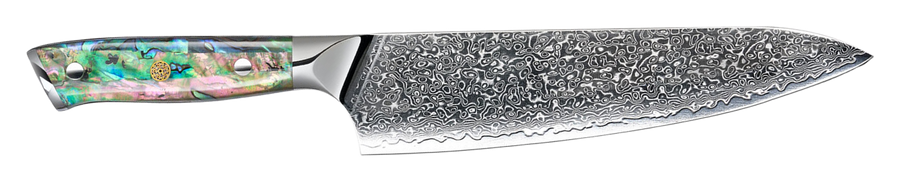
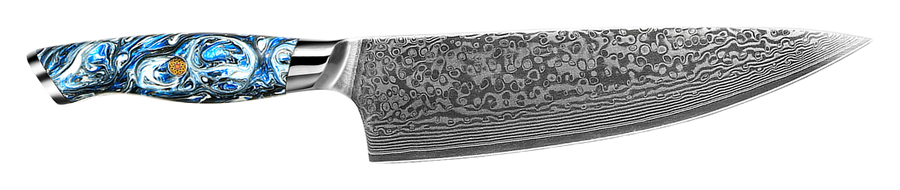
The Cobalt Damascus Cleaver 7.5" has a blade made of 67 layers of damascus steel around a 10Cr15CoMoV steel core, hardened to 60 ± 2 HRC. The rippled pattern comes from the layering, so no two blades look the same. The round handle pairs burl wood near the blade with honeycomb-patterned midnight blue resin at the butt, finished with a stainless steel bolster and a black spacer. The wood grain changes from piece to piece.
Shipping and Returns
Damascus Knife ships free with tracking across the United States: 1 to 3 business days to prepare, then 8 to 14 business days in transit, import duties included. You have 30 days after delivery to return your order.
See also: Damascus Meat Knives · Cobalt Midnight Blue Damascus Knives
In the kitchen
Our knives at work


Our models in use (styled scenes).
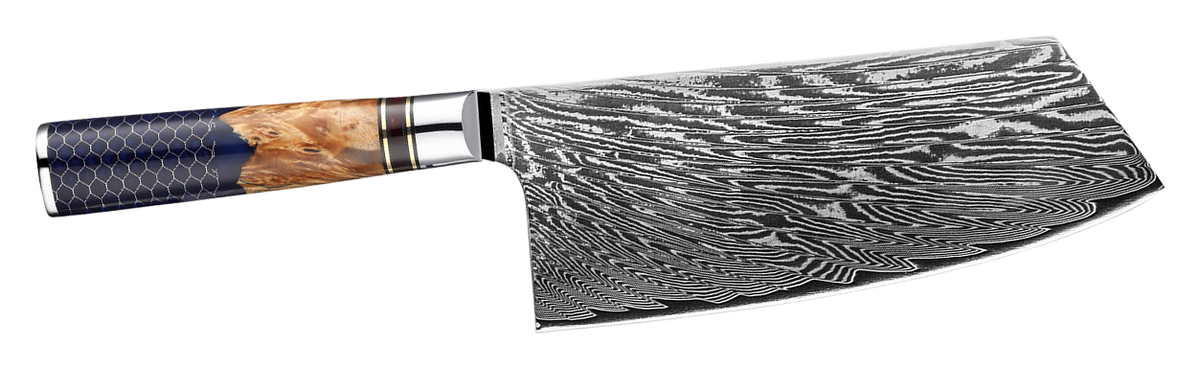
Fig. 01 · Damascus Cleaver 7.5"
Specs
The blade, by the numbers
| Steel | 67-layer damascus, 10Cr15CoMoV core |
|---|---|
| Layers | 67 |
| Hardness | 60 ± 2 HRC |
| Blade length | 7.5" (19 cm) |
| Overall length | 12.9 in (32.7 cm) |
| Spine thickness | 2 mm |
| Handle | Burl wood and honeycomb midnight blue resin, stainless steel bolster |
| Weight | 9.3 oz (263 g) |
| Edge | Double bevel |
| SKU | CD-CB-COUP19 |
Care
3 habits, years of sharp
Hand-wash it
Warm water, a drop of dish soap. Never the dishwasher.
Dry it right away
One towel, ten seconds. Never leave it in the sink.
Sharpen on a stone
1000 grit rebuilds the edge. Low, steady angle.
Questions
Before you buy
Can a cleaver cut bones?
Small soft bones and cartilage (poultry, ribs) yes. For large hard bones, use a saw: a heavy blow can chip the edge.
Cleaver or nakiri for vegetables?
Both work. A nakiri is lighter and thinner, a cleaver heavier and more versatile, with a wide blade that scoops food up.
Is the resin and wood handle water resistant?
The resin is waterproof, but the burl is still wood: a quick rinse is fine, a long soak is not. Hand wash the knife, dry it right away, and never leave it in the sink or put it in the dishwasher.
Do I need to oil my Damascus knife?
You only need to oil a Damascus knife regularly if the blade is carbon steel or the handle is unfinished wood. A thin coat of food-safe mineral oil or camellia oil protects against moisture. Stainless Damascus needs oil only now and then, for storage. Avoid WD-40 and cooking oils that turn sticky on a kitchen knife.
Can Damascus knives go in the dishwasher?
No, Damascus knives should never go in the dishwasher. Heat, long exposure to moisture and harsh detergents dull the pattern, encourage rust and damage the handle. The blade also knocks against dishes and loses its edge. Hand-washing with warm soapy water and drying immediately takes under a minute and keeps the knife in shape.
Can you sharpen a Damascus knife?
Yes, you can sharpen a Damascus knife like any kitchen knife, ideally on a whetstone. A medium grit around 1000 rebuilds the edge and a finer stone polishes it. Japanese-style blades are usually sharpened at a lower angle than Western knives. Skip pull-through sharpeners, which are too harsh for hard steel, and use a ceramic honing rod between sessions.
Which Japanese-style knife should I buy first?
The best first Japanese-style knife is a chef knife (gyuto) or a santoku. Both slice, dice and chop meat, fish and vegetables, so one blade covers most daily cooking. Pick a gyuto if you like a longer blade and rocking cuts, a santoku if you prefer a shorter, lighter knife. Add a nakiri later if you cook a lot of vegetables.
Guides


