







MareaDamascus Bread Knife 8"
- Blade length
- 8" (20 cm)
- Steel
- 67-layer damascus, 10Cr15CoMoV core
- Hardness
- 60 ± 2 HRC
- Handle
- Burl wood and blue resin, stainless steel bolster
Black Friday Month-25 % --d --h --m
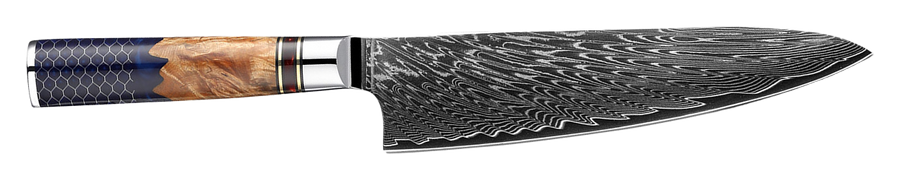
In the Marea series, this 8-inch knife is the only serrated one; every other blade has a straight edge. It cuts sourdough boules, baguettes and multigrain loaves, and also sandwich bread, panettone or a sponge cake split into layers. The serrations stay effective for a long time and rarely need sharpening. The round handle combines burl wood and lagoon-blue resin with a stainless steel bolster.
A bread knife has a serrated edge that bites through crust without crushing the crumb. It cuts baguettes, sourdough loaves or brioche into even slices. It is also great on tomatoes, citrus and cakes. Japanese-style blade, thin and hard.
Blade and Handle
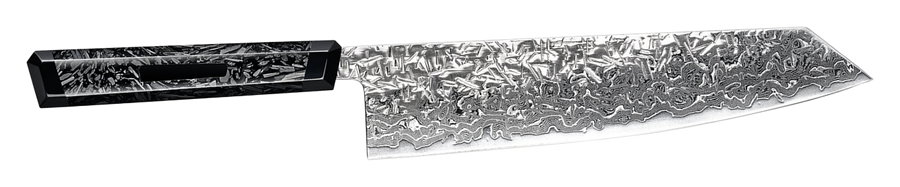
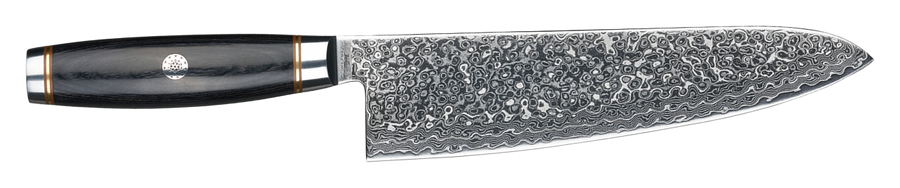
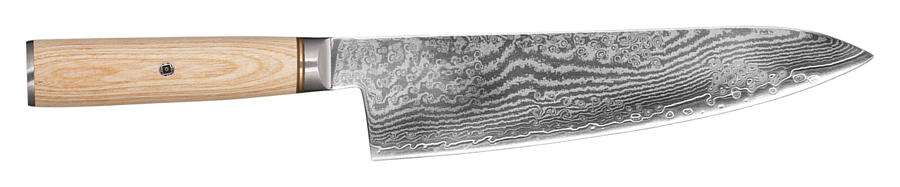
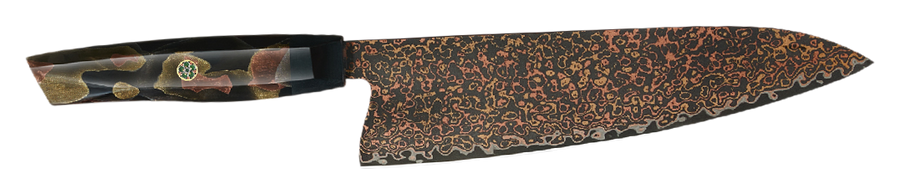
The Marea Damascus Bread Knife 8" has a blade made of 67 layers of damascus steel around a 10Cr15CoMoV steel core, hardened to 60 ± 2 HRC. The rippled pattern comes from the layering, so no two blades look the same. The round handle pairs burl wood with lagoon-blue resin, split by a stainless steel bolster. Every handle is one of a kind: the wood-to-resin mix changes from piece to piece.
Shipping and Returns
Damascus Knife ships free with tracking across the United States: 1 to 3 business days to prepare, then 8 to 14 business days in transit, import duties included. You have 30 days after delivery to return your order.
See also: Damascus Bread and Carving Knives · Marea Blue Resin Damascus Knives
In the kitchen
Our knives at work


Our models in use (styled scenes).

Fig. 01 · Damascus Bread Knife 8"
Specs
The blade, by the numbers
| Steel | 67-layer damascus, 10Cr15CoMoV core |
|---|---|
| Layers | 67 |
| Hardness | 60 ± 2 HRC |
| Blade length | 8" (20 cm) |
| Handle | Burl wood and blue resin, stainless steel bolster |
| Edge | Serrated |
| SKU | CD-RB-PAIN20 |
Care
3 habits, years of sharp
Hand-wash it
Warm water, a drop of dish soap. Never the dishwasher.
Dry it right away
One towel, ten seconds. Never leave it in the sink.
Sharpen on a stone
1000 grit rebuilds the edge. Low, steady angle.
Questions
Before you buy
Why a serrated blade for bread?
The serrations grip hard crust like a fine saw, then glide through the crumb without squashing it. A straight edge crushes fresh bread.
How do you sharpen a bread knife?
Rarely: serrations stay effective for a long time. When it dulls, a tapered rod or a professional sharpener touches up each serration.
Is the resin and wood handle water resistant?
The resin is waterproof, but the burl is still wood: a quick rinse is fine, a long soak is not. Hand wash the knife, dry it right away, and never leave it in the sink or put it in the dishwasher.
Do I need to oil my Damascus knife?
You only need to oil a Damascus knife regularly if the blade is carbon steel or the handle is unfinished wood. A thin coat of food-safe mineral oil or camellia oil protects against moisture. Stainless Damascus needs oil only now and then, for storage. Avoid WD-40 and cooking oils that turn sticky on a kitchen knife.
Can Damascus knives go in the dishwasher?
No, Damascus knives should never go in the dishwasher. Heat, long exposure to moisture and harsh detergents dull the pattern, encourage rust and damage the handle. The blade also knocks against dishes and loses its edge. Hand-washing with warm soapy water and drying immediately takes under a minute and keeps the knife in shape.
Can you sharpen a Damascus knife?
Yes, you can sharpen a Damascus knife like any kitchen knife, ideally on a whetstone. A medium grit around 1000 rebuilds the edge and a finer stone polishes it. Japanese-style blades are usually sharpened at a lower angle than Western knives. Skip pull-through sharpeners, which are too harsh for hard steel, and use a ceramic honing rod between sessions.
Which Japanese-style knife should I buy first?
The best first Japanese-style knife is a chef knife (gyuto) or a santoku. Both slice, dice and chop meat, fish and vegetables, so one blade covers most daily cooking. Pick a gyuto if you like a longer blade and rocking cuts, a santoku if you prefer a shorter, lighter knife. Add a nakiri later if you cook a lot of vegetables.
Guides


